Mindset
You Will Not Always Be Understood
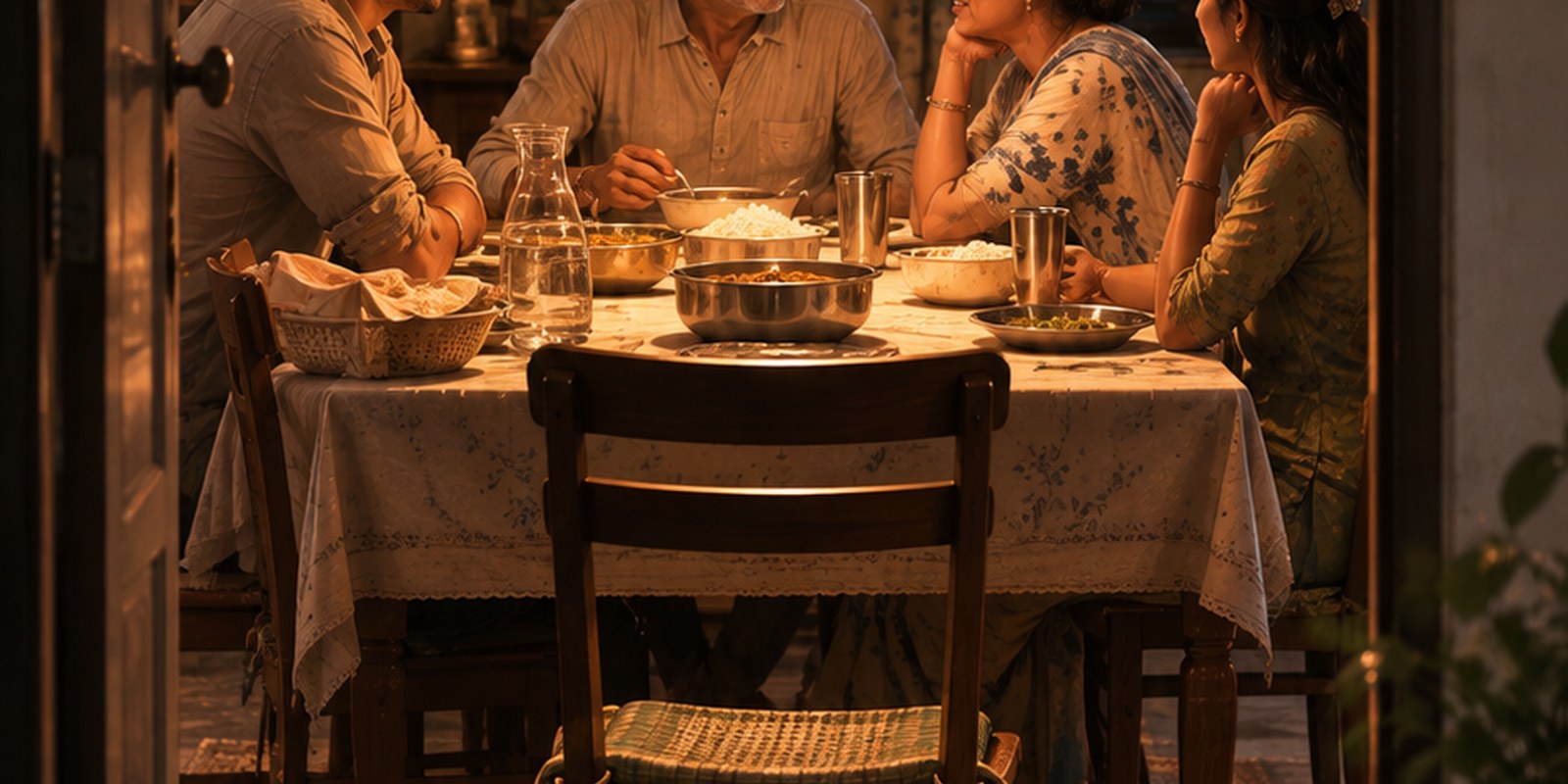
You change something real about how you live, and the people closest to you do not react the way you expected. Not hostility — something quieter. They keep referring to a version of you that no longer exists, and they do it with complete confidence, because that version is the one they have on file.
You will not always be understood. It is worth knowing why, because the reason is not that they do not care.
People assume you have finished changing
In 2013 Jordi Quoidbach, Daniel Gilbert and Timothy Wilson published a study in Science based on a large online sample — more than 19,000 adults, aged 18 to 68 — measuring personality, values and preferences.
They asked two kinds of question. How much have you changed in the last ten years? And how much do you expect to change in the next ten?
At every age, people reported having changed a great deal in the past decade and predicted they would change comparatively little in the next. Eighteen-year-olds said it. Fifty-year-olds said it. The researchers called it the end-of-history illusion: whatever age you are, you tend to believe you have just arrived at the finished version of yourself.
Two useful things follow. The first concerns other people: if everyone underestimates future change, they are also underestimating yours. Their model of you is not malicious or lazy — it is the same error they make about themselves, pointed outwards.
The second concerns you: you are almost certainly making the same mistake right now. The person you will be in ten years will differ from you more than you currently believe.
Some people only know the version of you they left behind. They are not being unkind. They are working from the last file they have, and nobody updates those files unprompted.
Why the file does not get updated
Long relationships run on shortcuts, and this is mostly a good thing. It would be exhausting to reassess everyone you know from scratch each time you met.
But the shortcut has a specific failure mode. The people who have known you longest have the oldest and most detailed models, built in circumstances that no longer exist — school, an old job, a period when you were struggling with something you have since resolved. Those models are stable precisely because they are well established, and they update slowly, usually only after a lot of contradicting evidence.
Meanwhile change is invisible from outside. They did not see the year of work. They see occasional evidence of the result, arriving irregularly, filtered through an old expectation — which is a very poor way to notice that someone has become different.
The loneliness is real, and it is a stage
There is a particular loneliness in this that is worth naming honestly, because pretending it does not exist is what makes it worse.
When you change and your surroundings do not, conversations get harder. You are interested in different things. Old jokes rely on a version of you that has moved on. You find yourself managing the difference — playing an old part slightly, so that things stay comfortable.
That is tiring, and it is a normal cost of change rather than a sign you have done something wrong. It is also usually temporary. Some relationships update over a year or two, once there is enough evidence to overwrite the old file. Others do not, and eventually settle at a friendly distance.
Not everyone comes with you
The hard part is accepting that some people will not make the transition, and that this is not betrayal in either direction.
Relationships are built around a shared context. When the context changes for one person and not the other, the thing you had in common gets smaller. That is a structural change, not a moral failure, and treating it as one — on either side — makes it much more painful than it needs to be.
The useful attitude is neither to force people to update nor to write them off. Let them keep the version they have. Do not argue with it, do not perform it, and do not build your decisions around whether it changes. Some of those files get updated later, in their own time, and the ones that do not can still be treated warmly.
What to do with this
- Stop auditioning for the update. Explaining who you have become rarely works and usually reads as insecurity. Time and evidence do it better than argument.
- Expect the lag. Assume a year or two before people's models catch up. Nothing is wrong during that period; it is just the delay.
- Find one or two people who know the current version. Not a whole new circle — one or two is enough to stop the constant translation.
- Keep the old relationships on their own terms. Meet people where the shared context still exists rather than where it used to be. Plenty survive that way.
- Apply the illusion to yourself. You are not the finished version either. Whatever you currently think you are permanently like, the data says you are wrong about it.
Being misunderstood by people who knew an earlier version of you is one of the ordinary costs of changing. It is not evidence that the change was a mistake — if anything, it is evidence that something actually moved.
Let them keep the old version. Keep growing.