Starting
Do the Thing Badly First
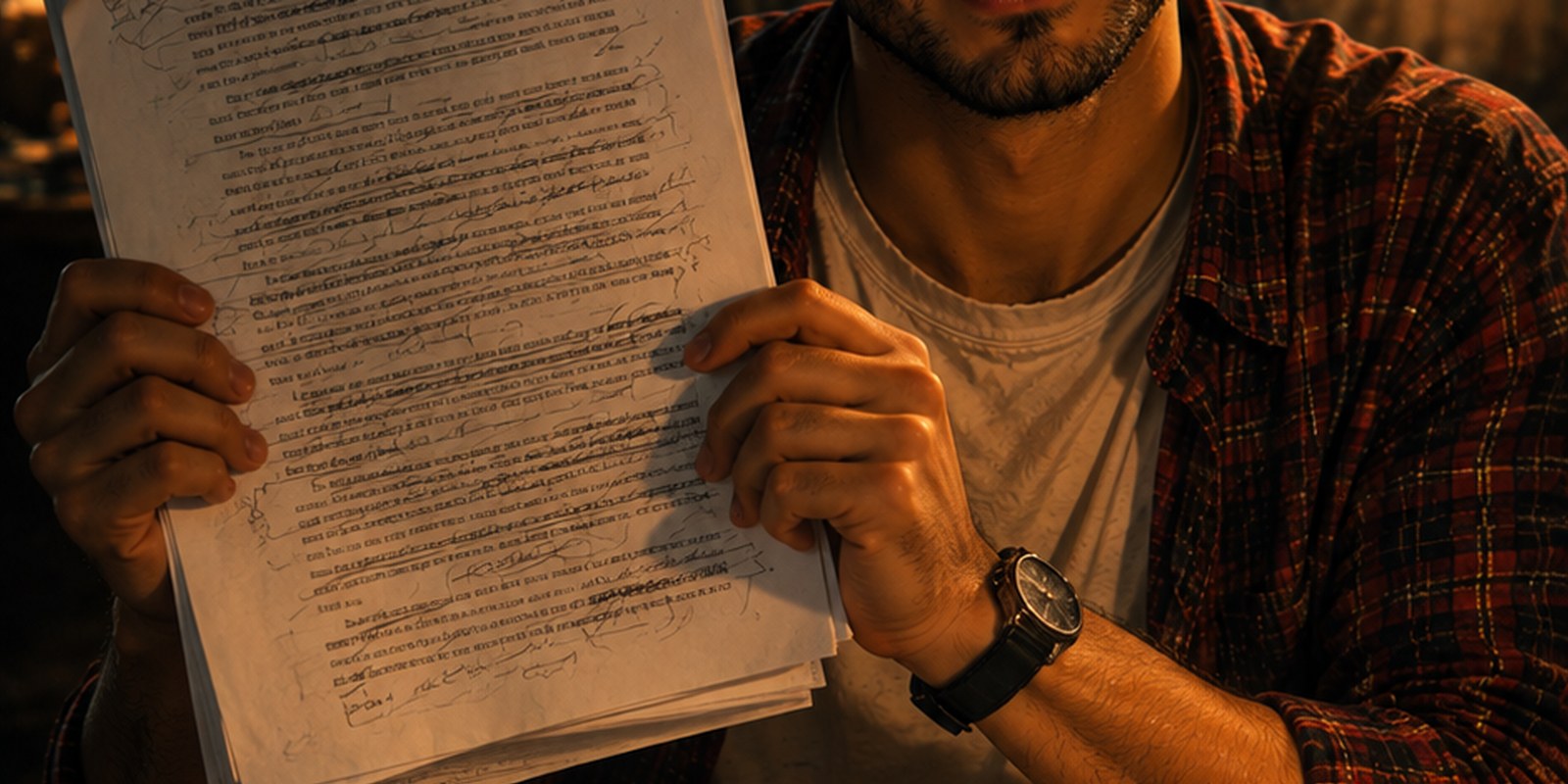
The idea in your head is perfect. It has no weak second act, no clumsy transitions, no parts you have not worked out yet. It is perfect because it is not real, and unreal things have no flaws — there is nothing there to be flawed.
The moment you make it, it becomes worse and better at the same time: worse than the version in your head, and better than an idea, because it now exists and can be improved.
The pottery class
There is a story told in Art & Fear, the 1993 book by David Bayles and Ted Orland, which is worth repeating with its status made clear: it is an anecdote from a book about making art, not a controlled experiment.
A ceramics teacher, the story goes, divided the class in two. One half would be graded purely on the quantity of pots produced — fifty pounds of pots for an A, forty for a B. The other half would be graded on quality: they needed to produce a single pot, but it had to be excellent.
At the end, the best pots came from the quantity group. While they were churning out pots and learning from each one, the quality group sat theorising about perfection and had, in the end, little to show but grand ideas and a pile of dead clay.
Treat it as a parable rather than data, and it still names something real: skill develops through completed attempts, and thinking about quality is not a substitute for producing quantity. Every field with fast iteration cycles has independently arrived at the same conclusion.
A bad first draft beats a perfect idea that never leaves your head. One of them can be improved.
Why the first version has to be bad
This is not a concession to human weakness. Attempting a good first version actively damages the work, for a specific reason.
Making something requires two opposed modes: generating, which needs looseness and tolerance for error, and evaluating, which needs strictness. Run them simultaneously and each one degrades the other. You produce a sentence, judge it, delete it, produce another, judge it — and after an hour there are two paragraphs, both cautious, and no momentum.
Separating them is the whole technique. Generate first, badly and quickly, without judging. Evaluate afterwards, ruthlessly, on material that exists. Almost all practical advice about creative work — rough drafts, prototypes, sketches, demos — is a version of this one idea.
There is a second reason as well. Until it exists, you do not know what the actual problems are. The difficulty you imagined is rarely the difficulty you meet. A bad version converts speculation into a specific list of things to fix, which is the most useful document you can have.
What editing too early destroys
Editing while you generate does not merely slow you down; it changes what gets made.
Early judgement kills the odd ideas first, because odd ideas look wrong before they are developed. What survives is the safe, obvious material — the version anyone would have produced. People who edit early frequently end up with competent, unremarkable work and cannot understand why, having worked so carefully.
It also leaves nothing to react against. A finished bad version gives you traction: this bit is dull, this bit is in the wrong order, this is the actual subject. That reaction is where the good version comes from, and it is unavailable to anyone who has only ever had an idea.
There is a further cost that only shows up over months. Work that never gets finished cannot be shown, and work that is never shown collects no feedback, which means the maker keeps refining against their own guesses. Two people with equal ability can diverge enormously on this alone: one has had thirty real reactions to finished pieces, the other has had none, and no amount of private polishing closes that gap.
Make it exist, fix it after
The practical shape of this is a hard separation between the two passes.
First pass: get to the end. Whatever it takes — placeholders, notes to yourself, sections marked as bad. Reaching the end of a bad complete version is worth more than a polished first third, because only the complete version shows you the shape.
Second pass, on a different day if possible: be as demanding as you like. Now your standards are an asset rather than an obstruction, because there is something in front of them to work on.
The gap between passes matters more than people expect. Distance restores your ability to see the work as a reader rather than as its author.
What to do with this
- Give the first pass a time limit, not a quality bar. Ninety minutes to a complete bad version. Speed is the point; it prevents the evaluating mode from switching on.
- Use placeholders shamelessly. "[Better example here]" keeps you moving. Perfect sentences in a document with no ending are worth nothing.
- Separate the passes by a day. Same-day editing is done by the person who made the choices, who is the worst available judge of them.
- Finish things, including bad ones. Completion is the unit that teaches. Abandoned attempts teach far less, however promising they were.
- Notice the planning loop. If you have been refining an idea for weeks without producing anything, that is not preparation. It is the comfortable place where things go to stay perfect.
The version in your head cannot be improved, shared or learned from. It can only be admired, and only by you.
Do the thing badly first. Make it exist. Fix it after.